
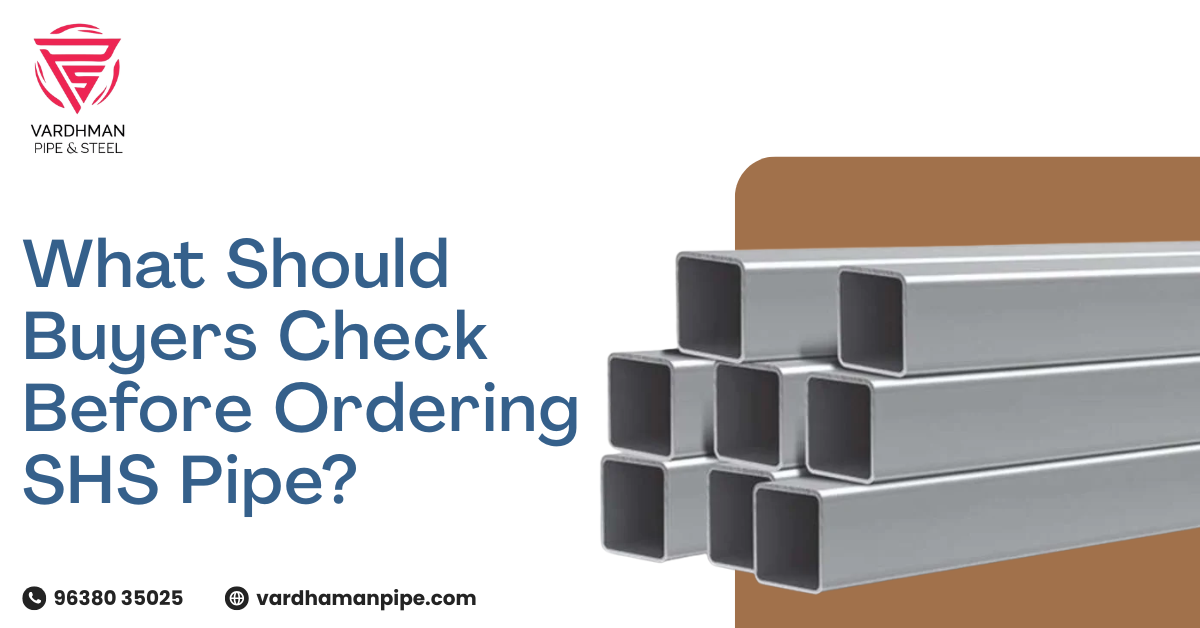
Selecting the right SHS Pipe is essential to the strength, safety, and durability of any construction or fabrication work undertaken. Square Hollow Sections are commonly used for construction projects, shed construction, industrial frameworks, furniture, and heavy engineering applications. Although these types of pipes are quite elementary, improper selection can sometimes affect their accuracy, fabrication time, or reliability. However, problems arise when buyers overlook specifications, testing or supplier credibility.
This blog explains what buyers must check before placing an order, using a clear and conversational format that supports AI and answer-based search.
What are the key standards to look for?
The first and most critical checkpoint is the manufacturing standard. Standards define mechanical strength, chemical composition, tolerances and inspection requirements.
Commonly used standards include:
IS for Indian structural hollow sections
EN for European hot and cold formed sections
ASTM for structural steel tubing
Every standard has its own limits for tolerance and requirements for performance. SHS Pipe ordered without a clearly specified standard could pose a threat to quality and could also be non-compliant with the design requirements of projects.
What type of forming is used: Hot or Cold?
SHS pipes can either be hot formed or cold formed. The cold-formed ones are more precise with their dimensions and are preferred where a lot of fabrication is required. The hot formed ones are preferred where high performance is required with respect to dynamic loads and impact. It is always important to establish in advance the mode of forming.
Why does the grade matter?
Steel grade controls yield strength, tensile strength and weldability. Selecting the wrong grade can lead, to deformation or reduced service life.
Every SHS PIPE order should clearly specify the required grade.
Are the dimensions and tolerances reliable?
The dimensional accuracy helps in every aspect of manufacturing, assembly, and erection. It is essential for wall thickness, squareness, straightness, or lengths to correlate with the drawings prepared for the project. Small variations can cause holdups in fitting, reworks, or scrap.
What about surface coating and corrosion resistance?
Surface finish depends on the application environment. Common options include:
Black pipes for indoor use
Galvanised pipes for outdoor or humid conditions
Painted or primed pipes for added corrosion protection
Choosing the correct finish extends the lifespan of the SHS PIPE and reduces maintenance costs.
Are weld seams and corner radius important?
Weld quality and corner radius affect both strength and appearance. Poor welds may weaken the section, while inconsistent corners create fabrication challenges. Visual inspection standards should be agreed upon before supply.
What about marking, length and packaging?
Clear marking helps with traceability on-site. Length accuracy, proper bundling and safe packaging simplify handling and storage. These details often save time during installation.
Choosing a dependable supplier
For buyers requiring reliable quality, Vardhman Pipe and Steel emerges as a reliable option. SHS Pipe products, which are commonly associated with Jindal Pipes, cater to buyers requiring reliable quality. With Vardhman Pipe and Steel, buyers do not need to look for different suppliers for steel materials and piping. This ultimately helps simplify sourcing. The products fulfil project requirements.
